
Web App, Platform & Brand • 2026
GigTag
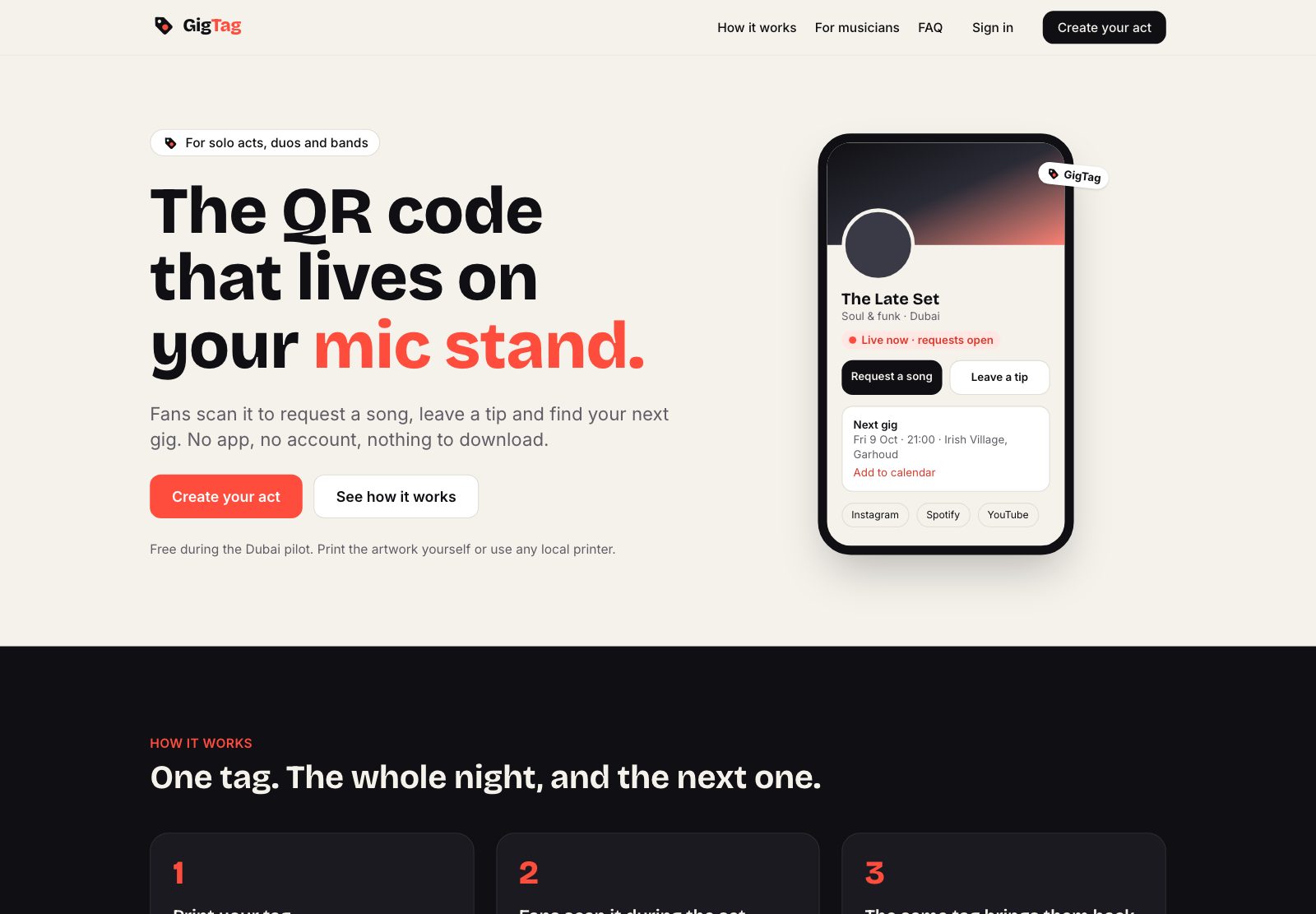
A permanent QR code for live acts. Fans scan it at the gig to request a song, find the next show and get in touch for bookings, with no app, no account and nothing to download.
Client
GigTag
Industry
Live Music / Events
Year
2026
Platform
Responsive web app for musicians and their audiences
Visual showcase
A closer look at the design, structure and digital experience.
Project overview
From business need to digital system.
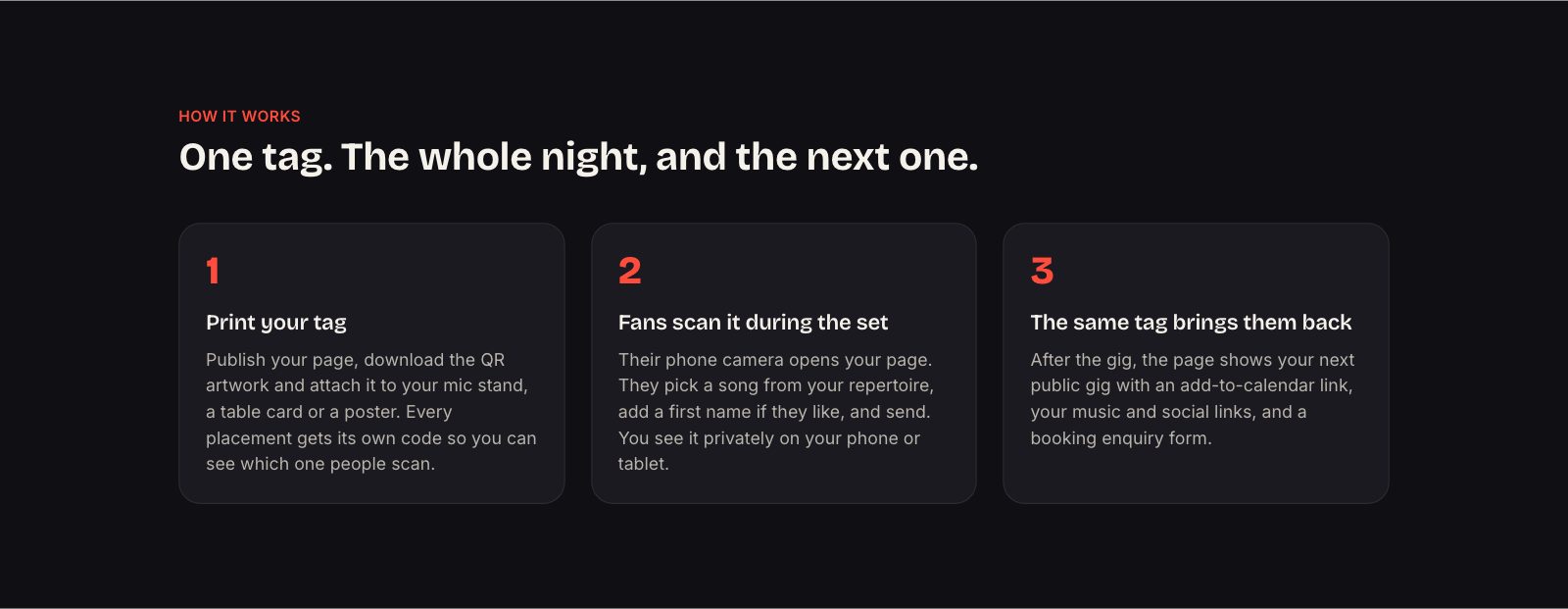
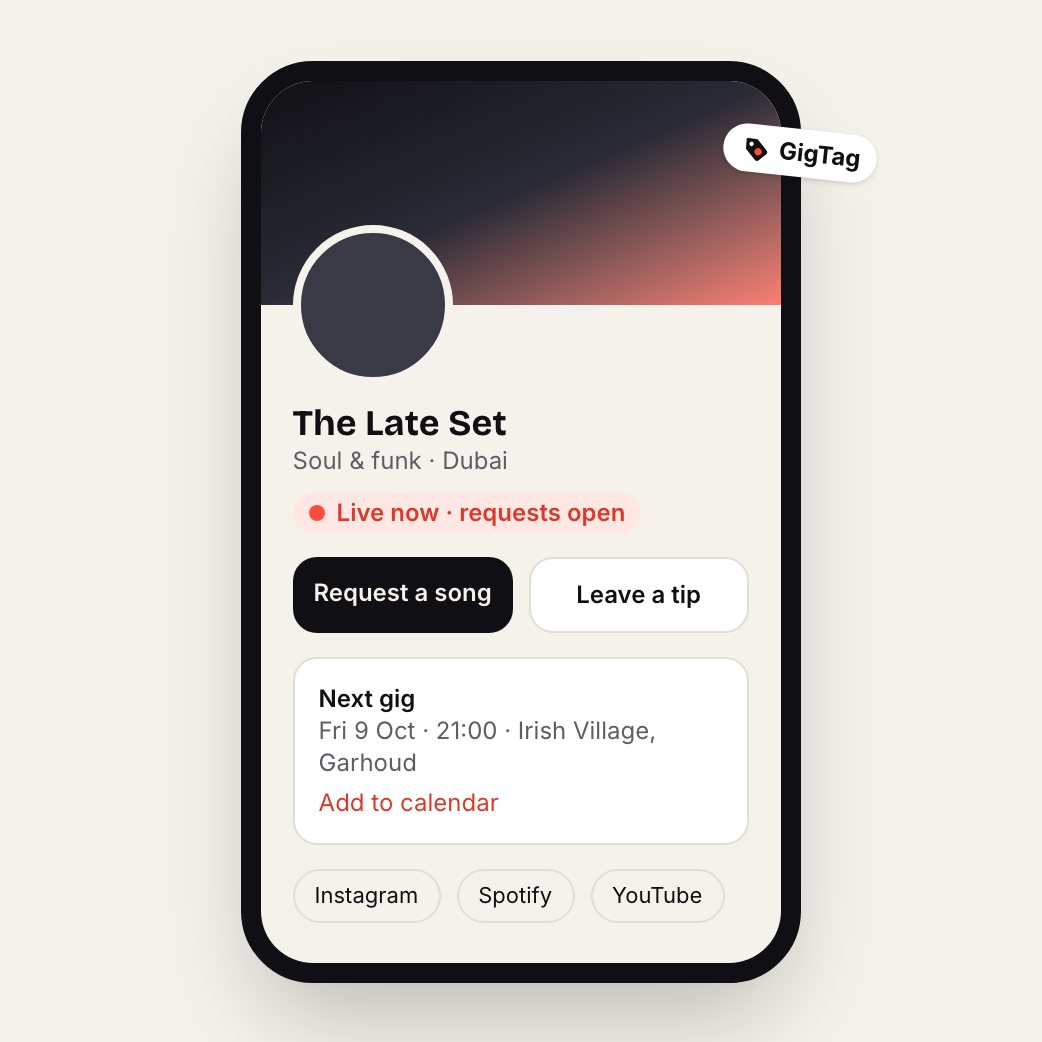
GigTag gives every musician act one QR code that lives on a mic stand, a table card or a poster, and opens the act's own page. During a set, the audience can send song requests from the act's real repertoire. After it, the same code shows the next gig, the act's music and social links, and a booking enquiry form. Oasis Digital designed and built the whole product, from the name and brand through to the platform underneath it, and it is currently in build for a pilot with working musicians in Dubai.
Challenge
Song-request apps tend to fail musicians in the same few ways. They turn requests into a public vote, so a table of friends can hijack a set. They ask the audience to download something mid-gig, which nobody does. And they print a code that breaks the moment the act renames itself or changes its link. On top of that, a real product for working acts has to handle bands with several members and one payout, weekly residencies that cross daylight-saving changes, venue Wi-Fi that drops mid-set, and tipping rules that differ by provider and country.
Solution
We made the request private and the code permanent. Requests go only to the performer, in the order they arrive, with no ranking and no way to pay to jump the queue. Each act's code is never reissued, and every placement gets its own code, so an act can see whether the mic stand or the table cards get scanned. The performer's live screen is built for a dark stage, with large controls and a visible connection state when the network drops. Behind it sits a Supabase and Next.js platform built in slices, each with its own database migrations and tests: gigs and weekly series with explicit daylight-saving handling and calendar export, band rosters with consent and a two-step ownership transfer, a booking inbox that saves an enquiry before it tries to email it, and moderation tools that can suspend requests, tips or links independently. Tipping sits on a payments ledger and provider adapter that is complete but deliberately switched off until a provider approves the model in writing.
What we delivered
The key systems, assets and improvements created for the project.
Name and brand system
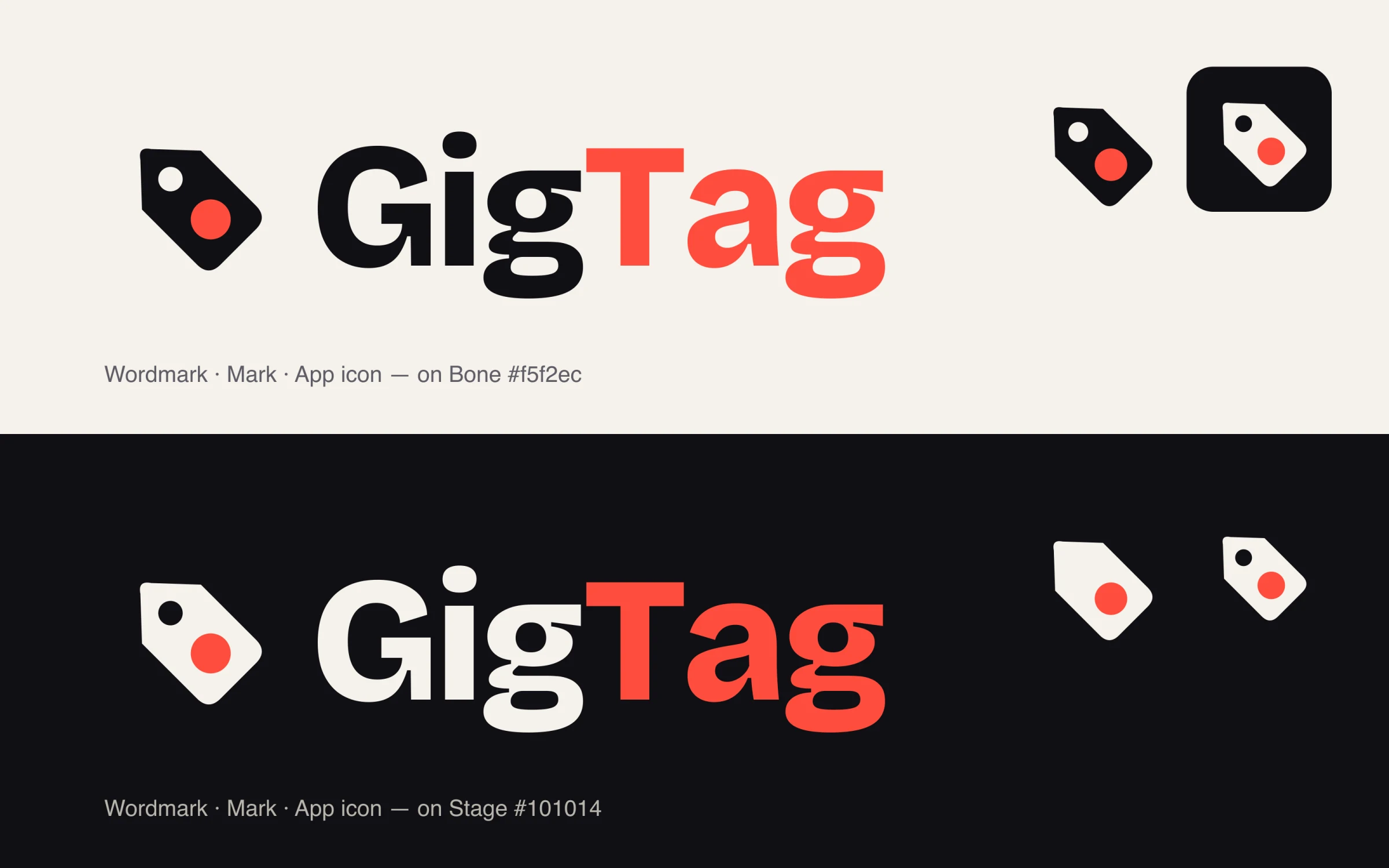
The GigTag name, a tag-shaped mark with a red live light, the wordmark, app icon, colour and type tokens, and a logo pack generated from one shared geometry.
Audience experience
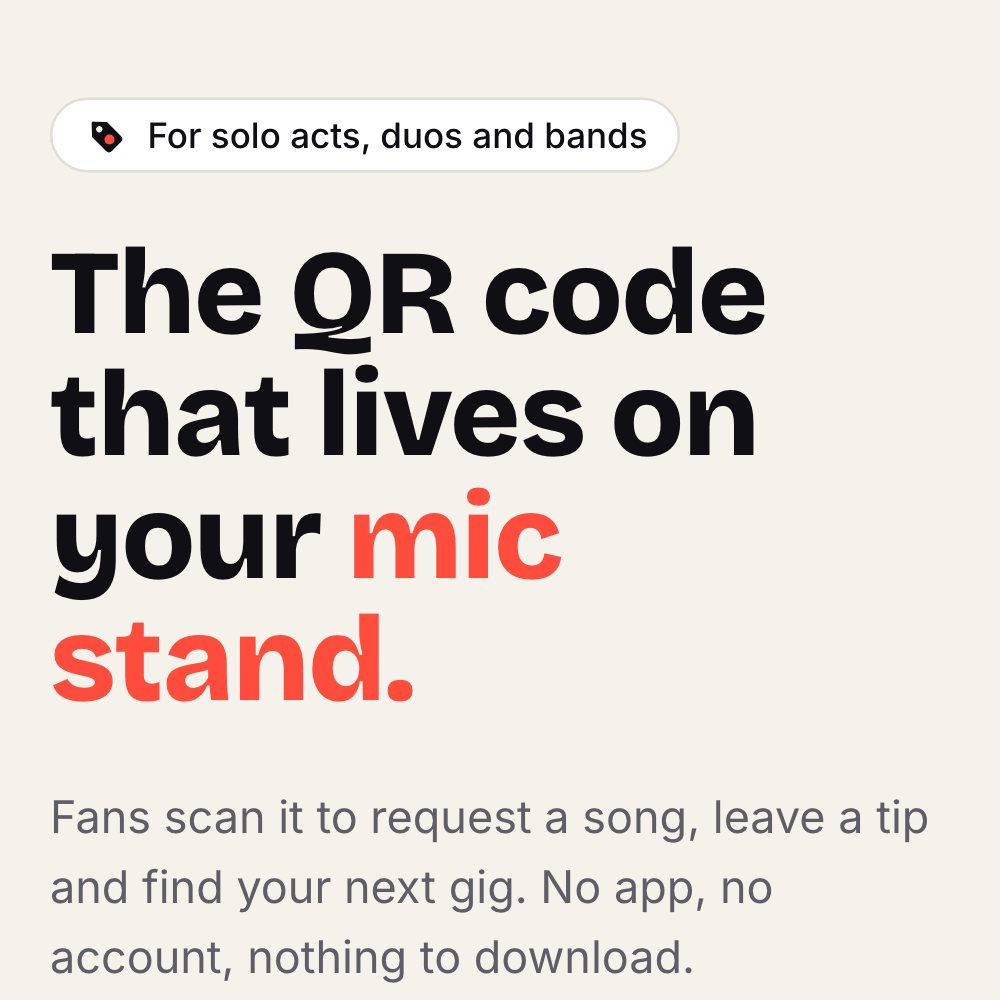
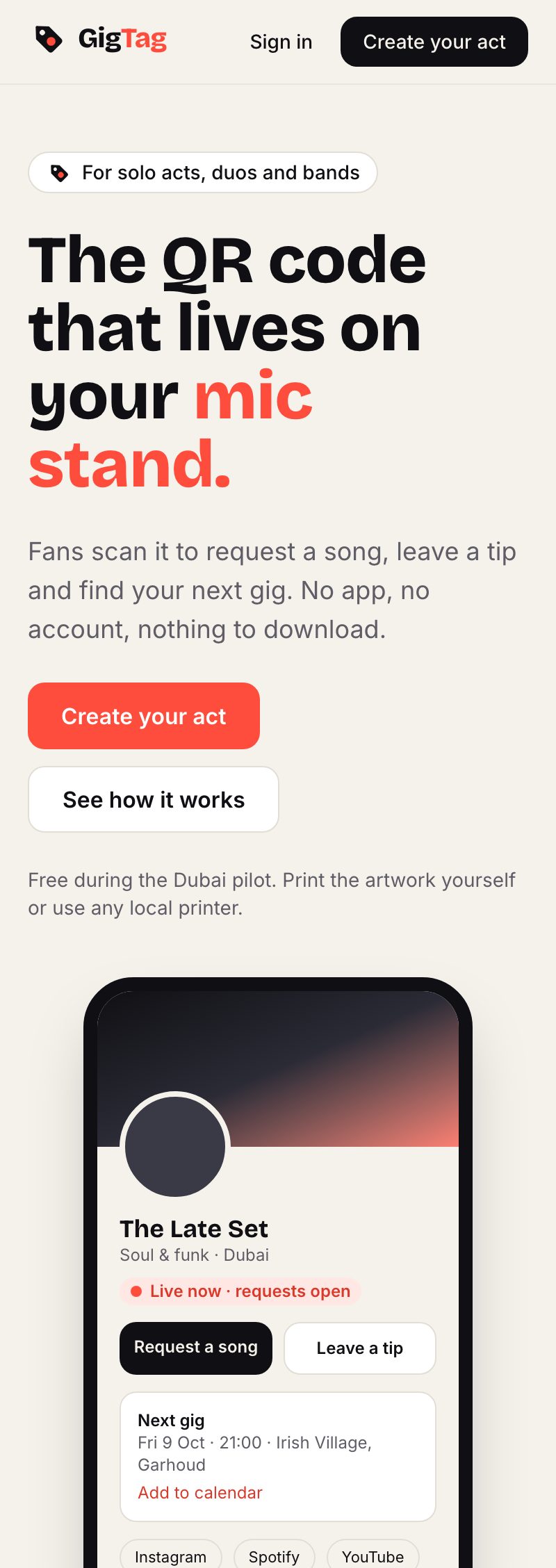
The public act page a fan lands on after scanning: request a song, find the next gig, follow the act's links or send a booking enquiry, all without installing anything.
Performer live screen
A dark, large-control queue for use on stage: pause or close requests, mark songs played and end the set, with a visible sync state when venue Wi-Fi drops.
Gigs and residencies
One-off gigs and weekly series with explicit daylight-saving handling, this-only and this-and-future edits, cancellations and calendar export.
Bands and ownership
Linked rosters that need each member's consent, gig participation across acts, and an ownership transfer that requires re-authentication and the recipient's acceptance.
Payments foundation
A ledger, provider adapter and signed-webhook pipeline tested end to end against a fake provider, ready to connect once a payment provider approves the model.
Operations and moderation
Independent suspension of profiles, requests, tips and links, an abuse report queue, a payment kill switch, and account deletion that keeps code tombstones so a code is never reused.
Project impact
Designed to create long-term business value.
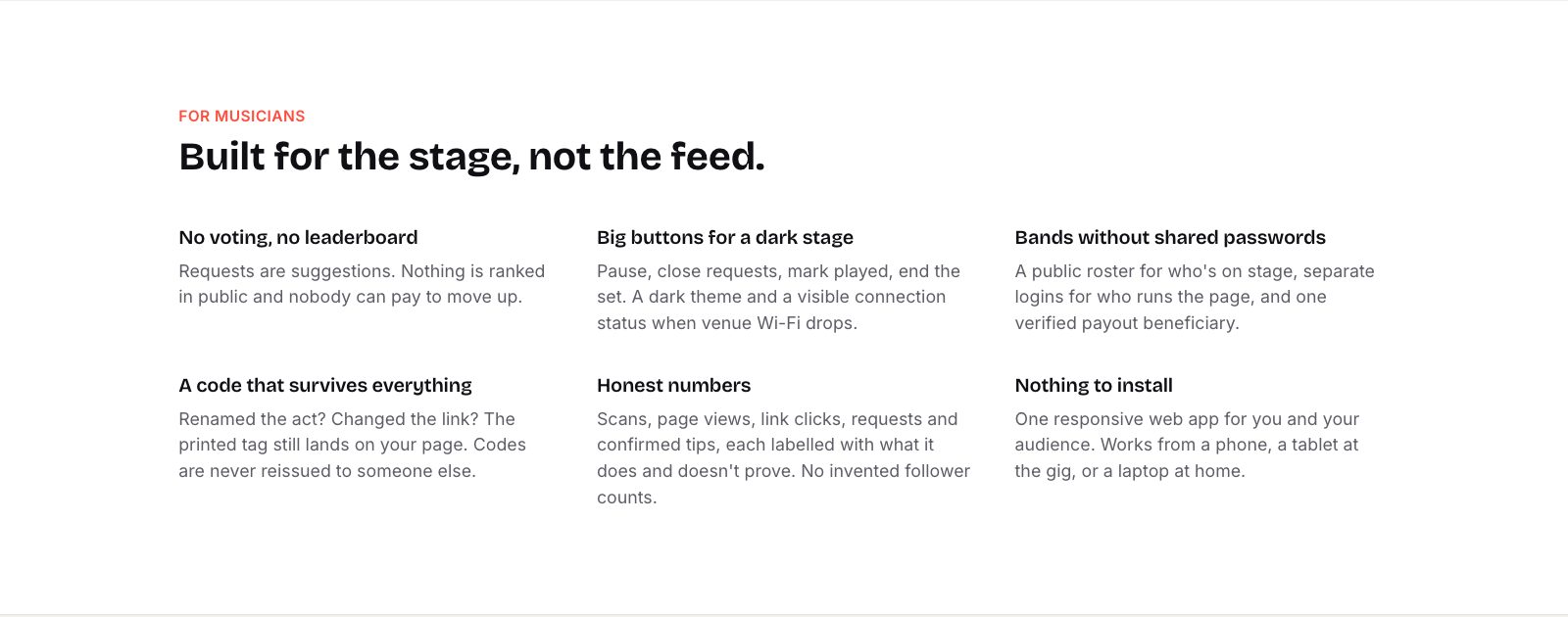
One permanent code per act, never reissued, so printed artwork keeps working after a rename or a link change.
Private song requests from the act's own repertoire: no public voting, no leaderboard, no paying to move up.
Per-placement codes, so an act can compare the mic stand against the table cards against the poster.
Print-ready QR artwork in PNG, SVG and PDF, with the quiet zone enforced so the code still scans off a dim stage.
Weekly residencies that survive daylight-saving changes, with add-to-calendar files and structured event data.
Analytics that label what each number does and does not prove: scans are scans, not attendance.
A full brand system, from the GigTag name through the mark, wordmark, app icon and logo pack.
Design details
Interface, brand and content details from the final delivery.
Our process
A clear process from first idea to final launch.
01
Discovery
We review the business, audience, goals, existing digital presence and project requirements.
02
Strategy
We define the structure, UX direction, content approach and technical requirements before design begins.
03
Design & build
We create the visual system, develop the platform and connect the core functionality required for launch.
04
Launch & optimise
We test, deploy, optimise performance and support improvements after the project goes live.
Next project
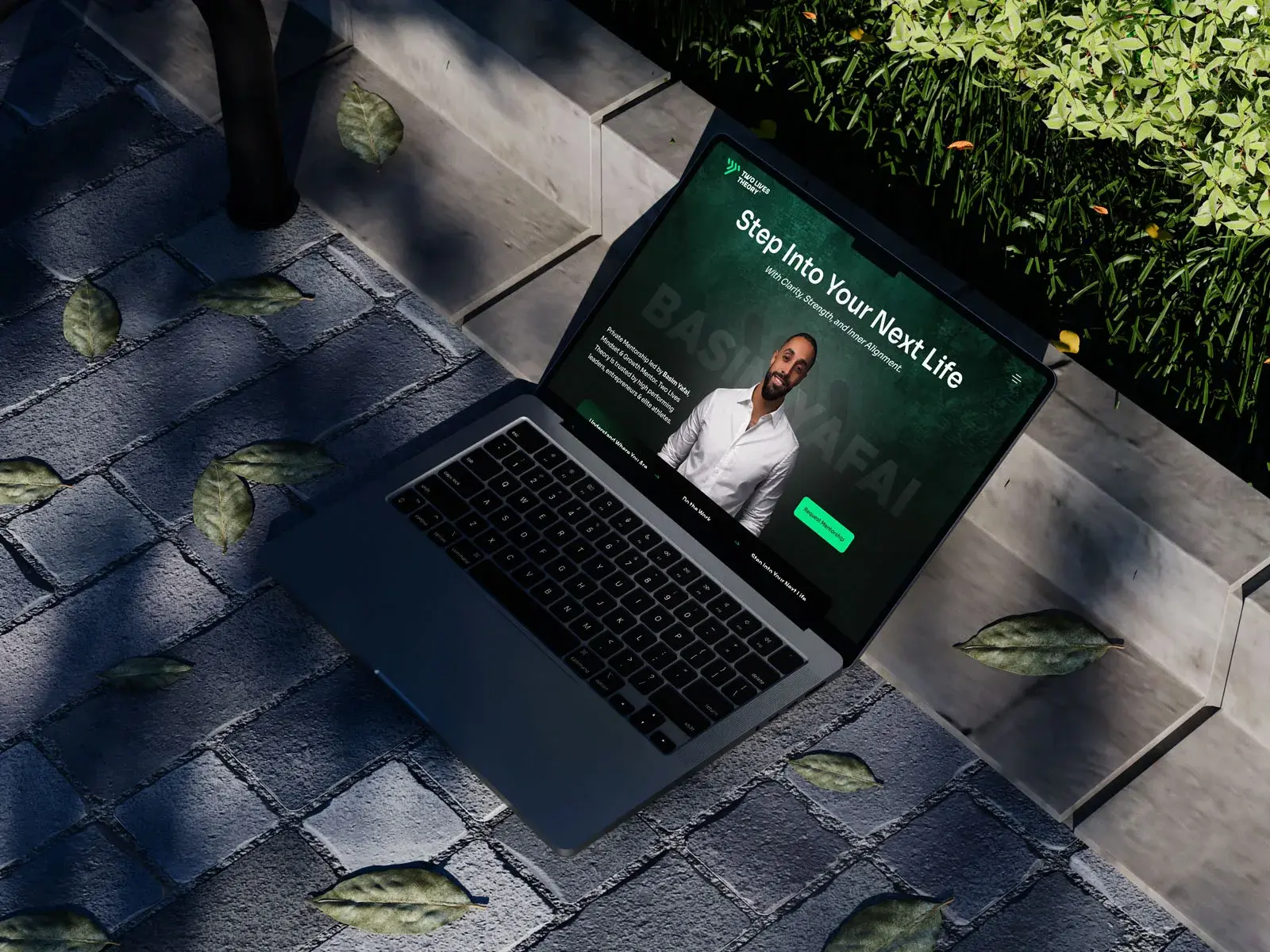
Two Lives Theory
Branding & Website Development
Start your project
Have a project like this in mind?
Whether you need search architecture, a website, an app, a custom AI tool or a platform nobody has built yet, we can turn it into something that ships — and gets found.
